
EliteGear HQ

Autonomous Mobile Robots (AMRs)
Autonomous Mobile Robots (AMRs) are advanced robots designed to navigate and operate independently in diverse environments, using sensors, cameras, and AI to interpret and move through their surroundings. Ideal for automating tasks that typically require manual labor, AMRs enhance efficiency, scalability, and safety across industries such as warehousing, logistics, manufacturing, and healthcare, enabling businesses to optimise workflows and reduce operational costs.
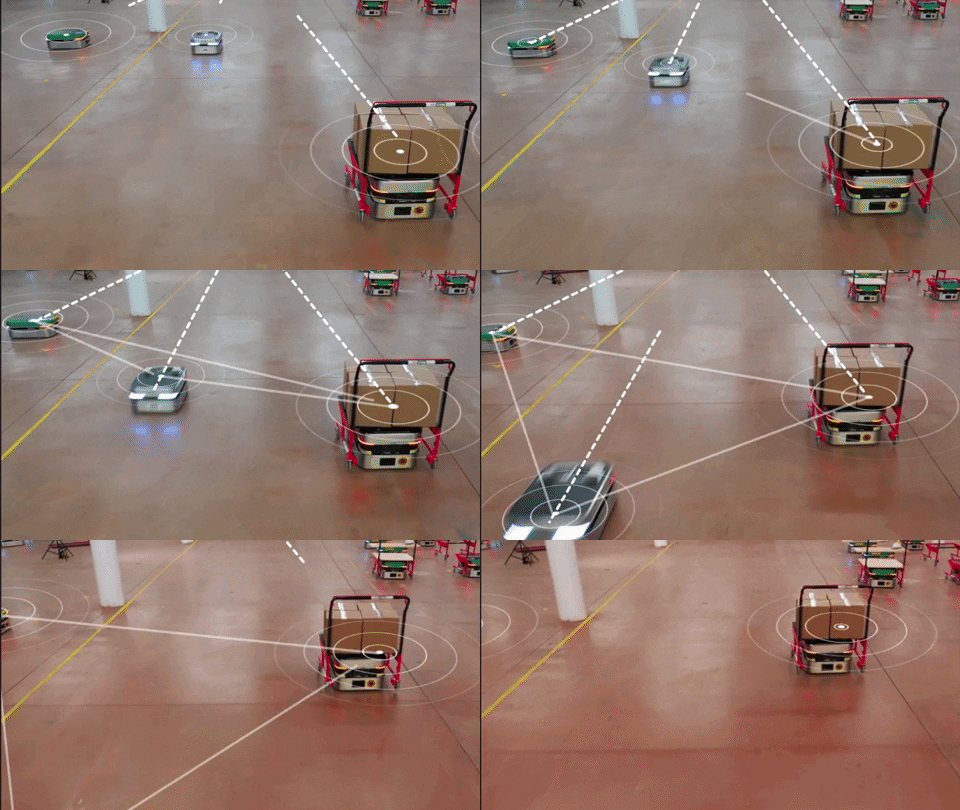
Autonomous Mobile Robots (AMRs) are cutting-edge robots designed to navigate and operate in various environments independently, using sensors, cameras, and artificial intelligence to interpret and move through their surroundings. They’re widely used across industries for automating tasks that typically require manual labor, significantly improving efficiency and safety.
Key Features of AMRs:
Flexible Navigation: AMRs use advanced sensors (like LiDAR), cameras, and AI algorithms to detect obstacles and map out the most efficient paths, allowing them to navigate dynamically in real-time.
Scalability: AMRs can be easily added to existing workflows without requiring infrastructure changes, making them ideal for operations with evolving demands.
Versatile Payload Capacity: AMRs come in various sizes and load capacities, from small robots for parts and materials to larger models for pallets and heavy items.
Smart Task Allocation: Equipped with software that enables task scheduling and resource management, AMRs can independently prioritize and fulfill tasks based on real-time operational needs.
Applications of AMRs:
Warehousing and Logistics: AMRs are commonly used in order picking, transporting goods, and inventory management, enhancing fulfillment speed and accuracy.
Manufacturing: In production facilities, AMRs transport materials and components between workstations, reducing the need for manual handling and speeding up production cycles.
Healthcare: AMRs assist in hospitals by transporting medications, supplies, and linens, freeing up staff to focus on patient care.
Retail: In large retail spaces, AMRs help with restocking shelves and transporting items from storage to the floor, keeping inventory levels consistent.
Benefits:
AMRs bring improved efficiency, adaptability, and safety to various industries by automating repetitive and resource-intensive tasks, allowing employees to focus on higher-value activities. Their ability to integrate with existing systems and scale with business needs makes AMRs a vital component of modern industrial automation solutions.